From Waste to Resource: The Shift Redefining Agriculture
For a long time, agricultural waste was seen as an inevitable byproduct of farming. Organic residues, bagasse, leaves, and plant matter were simply accumulated or discarded without real utilization.
Today, that perspective has changed.
In a context where sustainability is no longer optional but necessary, waste valorization has become a key strategy. This is where the benefits of composting emerge as a practical, cost-effective solution aligned with the evolving demands of the agricultural sector.
Particularly in industries like agave, where large volumes of organic matter are generated, composting represents a tangible opportunity to close production cycles.
What Does Compost Really Do in the Soil?
Talking about the benefits of composting is not just about fertilization.
Compost acts as a comprehensive soil enhancer. Its impact goes beyond supplying nutrients—it transforms the structure and functionality of the soil.
When compost is incorporated into the soil, several processes occur simultaneously:
- Organic matter increases
- Water retention improves
- Microbial activity is stimulated
- Nutrient availability is optimized
This creates a more stable and productive environment for crop development.
Soil as a Living System: Why Compost Matters
One of the most common mistakes in traditional agriculture is treating soil as merely a physical support.
In reality, soil is a living system. It contains microorganisms that directly influence crop health and productivity.
This is where the benefits of composting become even more relevant.
By adding decomposed organic matter, compost:
- Feeds beneficial microorganisms
- Enhances soil biodiversity
- Reduces the need for chemical inputs
- Promotes natural fertility processes
This approach is especially important for long-cycle crops such as agave.
Composting Benefits in Agave Cultivation
Agave, by nature, requires well-structured soils with long-term nutrient retention capacity.
In this context, the benefits of composting translate into concrete advantages:
- Improved root development: Compost-enriched soil allows roots to grow deeper and more efficiently.
- Greater resilience to adverse conditions: Moisture retention helps withstand drought periods.
- Optimized growth: Gradual nutrient availability supports balanced development.
- Reduced soil degradation: Compost helps prevent erosion and loss of fertility.
This makes compost a strategic ally in agave production.
Bagasse Utilization: An Opportunity in the Agave Industry
One of the biggest challenges in the agave industry is managing bagasse, a byproduct generated in large quantities during processing.
However, this material has enormous potential when incorporated into composting processes.
Transforming bagasse into compost allows producers to:
- Reduce industrial waste
- Generate natural fertilizer
- Lower operational costs
- Improve process sustainability
This approach turns an environmental problem into a productive solution.
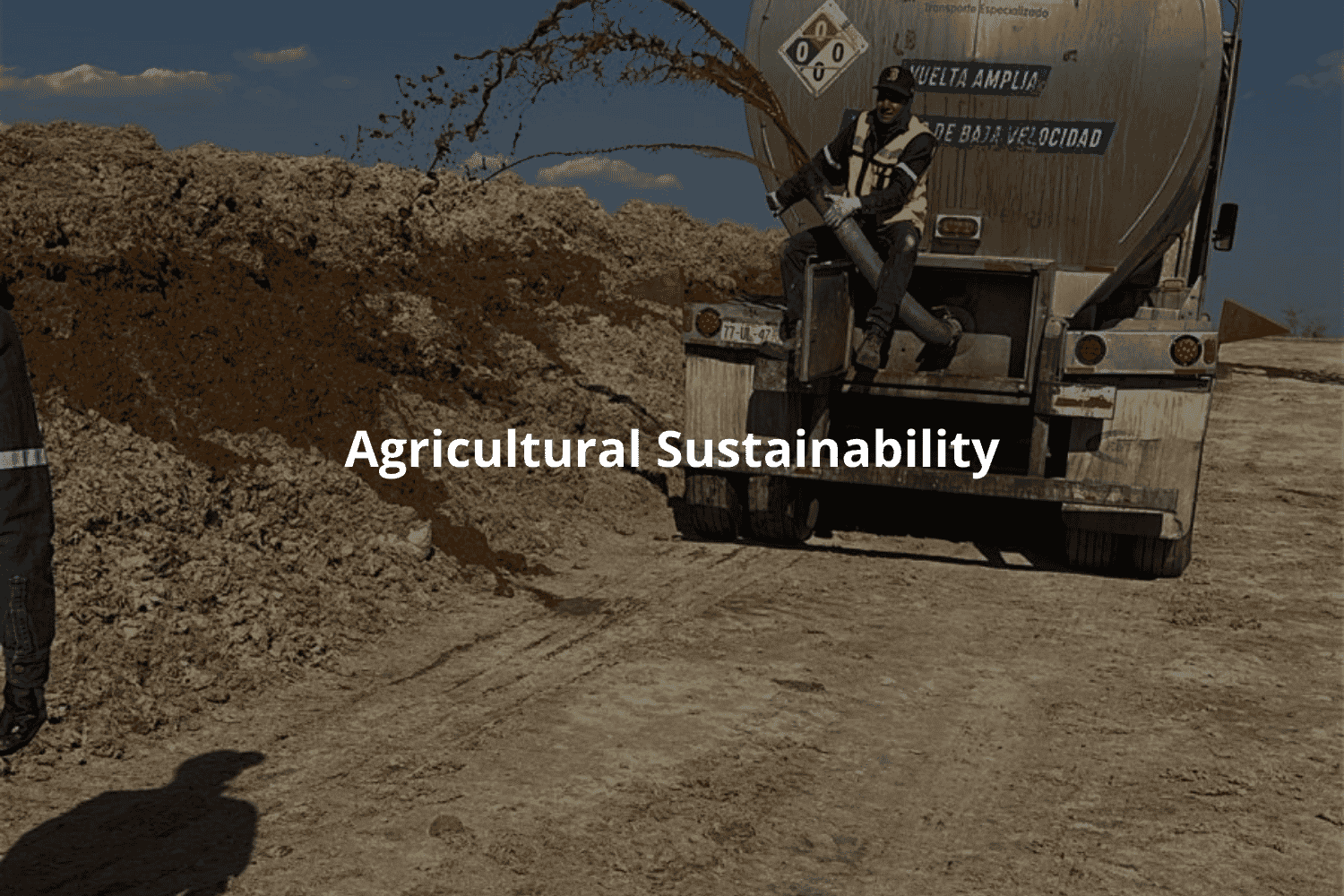
Agricultural Sustainability: Beyond the Narrative
Today, talking about sustainability is not enough—companies must demonstrate real action.
The benefits of composting align perfectly with this new model, as they enable:
- Reduced use of chemical fertilizers
- Lower environmental footprint
- Promotion of regenerative practices
- More efficient resource use
In the case of agave, this is particularly relevant due to the environmental impact of intensive production.
SUE Tequilana: A Sustainable Vision in the Agave Industry
Within this context, SUE Tequilana represents a clear example of evolution in the sector.
Its approach goes beyond raw material production, integrating practices that optimize resource use and reduce environmental impact.
The utilization of waste and its transformation into compost aligns directly with this vision, enabling progress toward more efficient and sustainable models.
The Economic Impact of Composting in Agriculture
Beyond environmental benefits, compost also has a direct impact on profitability.
By implementing composting practices, producers can:
- Reduce fertilizer costs
- Improve crop yields
- Minimize losses due to soil degradation
- Maximize internal resource use
This makes compost an investment rather than an expense.
The Future of Farming: Regenerative Agriculture
Agriculture is evolving toward more sustainable and regenerative models.
In this context, the benefits of composting play a central role, as they help restore soils and improve productivity without compromising the environment.
This approach responds not only to ecological needs but also to a growing market demand for more responsible products.
A Competitive Advantage for the Agave Industry
Integrating compost into production processes not only improves cultivation but also strengthens company positioning.
Today, consumers and markets increasingly value:
- Sustainable practices
- Responsible processes
- Efficient resource use
For SUE Tequilana, this represents an opportunity to stand out in a highly competitive sector.
Composting Benefits as the Foundation of a Sustainable Model
The benefits of composting go far beyond improving soil. They represent a smart way to connect productivity, sustainability, and efficiency.
In the agave industry, where environmental and production challenges continue to grow, this type of solution becomes essential.
Turning waste into resources not only optimizes processes—it redefines how we understand agriculture.
And along this path, SUE Tequilana has the opportunity to lead a new stage: more responsible, more efficient, and aligned with the future of farming.
Explore other articles: