The tequila industry is one of Mexico’s most representative agro-industrial sectors. However, its production process generates large volumes of organic waste that, if not properly managed, can cause negative environmental impacts. Among these residues, agave bagasse and vinasse stand out—by-products that have traditionally posed an environmental challenge for distilleries.
When these organic wastes are disposed of without treatment or sent to landfills, they can contaminate soil and water bodies and increase greenhouse gas emissions. However, through responsible management and sustainable processes, these residues can be transformed into high-value resources for agriculture, strengthening the circular economy and reducing the sector’s environmental footprint.
At SUE Tequilana, we work to convert organic waste from the tequila industry into high-quality organic compost, contributing to environmental protection and sustainable agricultural development.
What Is Organic Waste?
Organic waste refers to biodegradable materials of plant or animal origin that can naturally decompose and reintegrate into biological cycles. Unlike inorganic waste, these materials contain essential nutrients that can be utilized when properly managed.
In the tequila industry, organic waste primarily comes from processing blue agave during tequila production. Due to its composition and volume, this waste requires specialized management systems that enable its recovery and prevent environmental harm.
Currently, the waste sector is responsible for a significant share of global methane emissions—one of the greenhouse gases with the greatest impact on global warming. Reducing these emissions through proper organic waste treatment is a key step toward a more sustainable production model.
Main Organic Waste from Tequila Producers
During tequila production, different types of organic waste are generated, with agave bagasse and vinasse being the most significant.
Agave Bagasse
Agave bagasse is the solid residue that remains after cooking and extracting sugars from the agave. It is mainly composed of plant fibers with high organic matter content.
When accumulated without treatment, this residue can generate unpleasant odors, pest proliferation, and soil degradation. However, through controlled composting processes, agave bagasse can be transformed into organic compost that improves soil structure, increases moisture retention, and promotes microbiological activity.
At SUE Tequilana, agave bagasse is one of the primary raw materials used to produce organic compost, allowing nutrients extracted during agave cultivation to return to the fields.
Vinasse
Vinasse is a liquid residue generated during tequila distillation. It is characterized by its high organic load and its polluting potential if discharged without proper treatment.
Poor vinasse management can lead to water body contamination, agricultural soil damage, and greenhouse gas emissions. Therefore, its responsible treatment and recovery are essential to reducing the tequila industry’s environmental impact.
At SUE Tequilana, vinasse is managed under technical and environmental criteria that enable its stabilization and integration into sustainable processes within a circular economy model.
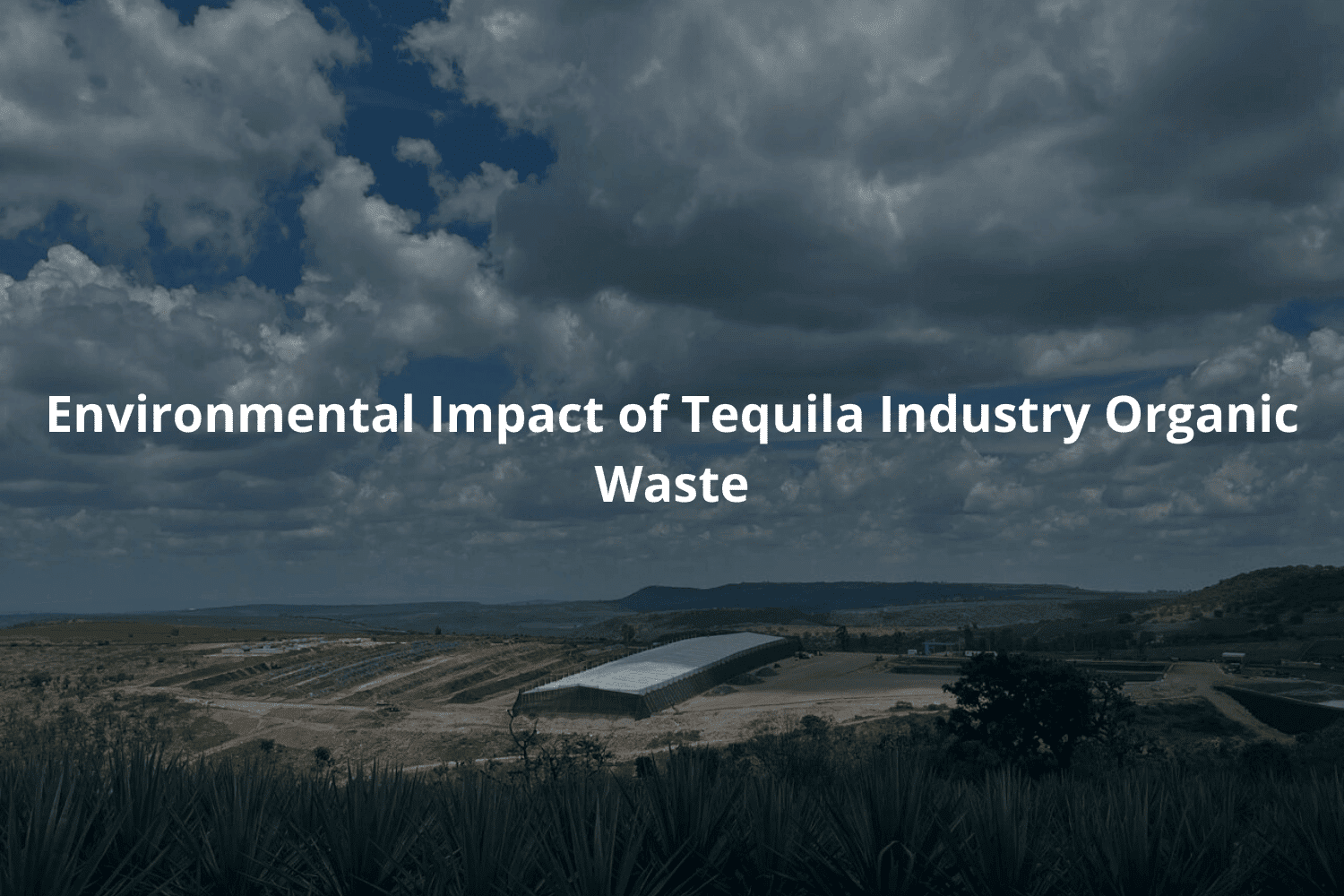
Environmental Impact of Tequila Industry Organic Waste
Improper management of organic waste generated by tequila producers can lead to several environmental impacts:
Greenhouse Gas Emissions
The decomposition of organic waste without oxygen produces methane, a gas with a significantly higher global warming potential than carbon dioxide.
Soil and Water Contamination
Leachates generated by poorly managed waste can infiltrate soil and contaminate rivers, lakes, and aquifers, affecting biodiversity and agricultural production.
Impact on Nearby Communities
The accumulation of organic waste creates unpleasant odors and conditions that encourage pest presence, affecting the quality of life of communities near production areas.
Loss of Valuable Resources
Agave bagasse and vinasse contain valuable nutrients that can be returned to the soil. When not utilized, dependence on chemical fertilizers increases.
Sustainable Management: Composting and Circular Economy
Proper management of organic waste from the tequila industry represents an opportunity to transform an environmental problem into a productive solution. Composting is one of the most effective methods to achieve this.
This aerobic biological process allows microorganisms to decompose organic matter and convert it into compost—a natural fertilizer that improves soil fertility, structure, and water retention capacity.
At SUE Tequilana, we apply composting processes focused on agro-industrial waste, especially from the tequila sector, ensuring a final product that meets quality standards and contributes to more sustainable agriculture.
This model is part of the circular economy, in which waste is reintegrated into the production cycle, reducing waste generation, lowering the carbon footprint, and optimizing the use of natural resources.
SUE Tequilana: Transforming Waste into Opportunities
At SUE Tequilana, we work to ensure that organic waste from the tequila industry ceases to be an environmental liability and becomes an opportunity for agriculture and industry. By utilizing agave bagasse and vinasse, we produce high-quality organic compost that enhances agricultural productivity and soil health.
Our commitment is to promote sustainable solutions that reduce the environmental impact of the tequila sector, strengthen the circular economy, and encourage responsible development. Proper organic waste management is key to building a more sustainable future—and at SUE Tequilana, we work every day to make it possible.
Continue exploring with other articles:
- Agave Vinasse: Environmental Challenges and Opportunities for Sustainable Agriculture
- The Role of Organic Fertilizers in Soil Regeneration and the Circular Economy of Agave
Frequently Asked Questions About Organic Waste
What Is Organic Waste? Examples
Organic waste consists of biodegradable materials of plant or animal origin that can naturally decompose. It mainly comes from household, agricultural, and industrial activities.
Examples of organic waste include fruit and vegetable scraps, eggshells, coffee grounds, dry leaves, pruning waste, food leftovers, and manure.
What Is Inorganic Waste?
Inorganic waste refers to materials that do not easily decompose in nature or require industrial processes for recycling. They are generally made from materials such as plastic, glass, metal, or aluminum. Unlike organic waste, these materials can remain in the environment for long periods if not properly managed.
What Are 10 Types of Organic Waste?
Some of the main types of organic waste include:
- Fruit scraps
- Vegetable scraps
- Eggshells
- Coffee grounds
- Tea bags and leaves
- Dry leaves
- Pruning waste
- Nut shells
- Animal manure
- Used paper napkins
How to Classify Organic Waste?
Organic waste can be classified according to its origin and composition. The most common categories are:
- Food waste: leftovers and uneaten food.
- Plant waste: leaves, branches, grass, and pruning residues.
- Animal-origin waste: manure and biodegradable organic remains.
- Municipal organic waste: waste generated in households and businesses.
This classification facilitates treatment and recovery through processes such as composting or anaerobic digestion.