More Than Fertilizing: Regenerating Soil from Its Origin
For years, the dominant agricultural approach focused on maximizing production through chemical inputs. If the soil lost nutrients, fertilizers were added; if yields dropped, doses were increased.
However, this model has shown its limits.
Today, the challenge is not only to produce more, but to produce better. In this context, organic fertilizer has shifted from being a secondary alternative to becoming a central element in modern agriculture.
Particularly in crops like agave—where cycles are long and soil impact is significant—investing in regenerative solutions is no longer optional; it is strategic.
What Is Organic Fertilizer? (Beyond the Basic Definition)
Organic fertilizer is any natural-origin material that, as it decomposes, provides nutrients to the soil and improves its physical, chemical, and biological properties.
But its real value lies not only in what it provides, but in how it does it.
Unlike synthetic fertilizers, organic fertilizer:
- Releases nutrients gradually
- Improves soil structure
- Stimulates microbial activity
- Increases water retention
It is a slower process, yes—but also more sustainable and balanced.
Soil and Organic Fertilizer
One of the main problems of intensive agriculture is soil degradation.
When nutrients are constantly extracted without proper replenishment, the land loses fertility, structure, and productivity.
This is where organic fertilizer plays a key role.
It not only replenishes nutrients, but rebuilds the soil system from within. This allows:
- Restoration of degraded soils
- Long-term productivity
- Reduced dependence on external inputs
In other words, it transforms the logic of exploitation into one of regeneration.
Application in Agave Cultivation: A Necessity, Not an Option
Agave is a unique crop. Its growth can take years, and during that time it depends entirely on soil quality.
In this context, the use of organic fertilizer offers clear advantages:
- Sustained nutrition: Gradual nutrient supply is ideal for long-cycle crops.
- Better adaptation to climate conditions: Soils with higher organic matter retain moisture more effectively.
- Greater crop resilience: Healthy soil strengthens the plant from the root.
- Lower environmental impact: Reduces the use of chemical fertilizers.
This makes organic fertilizer a key tool for improving efficiency in agave cultivation.
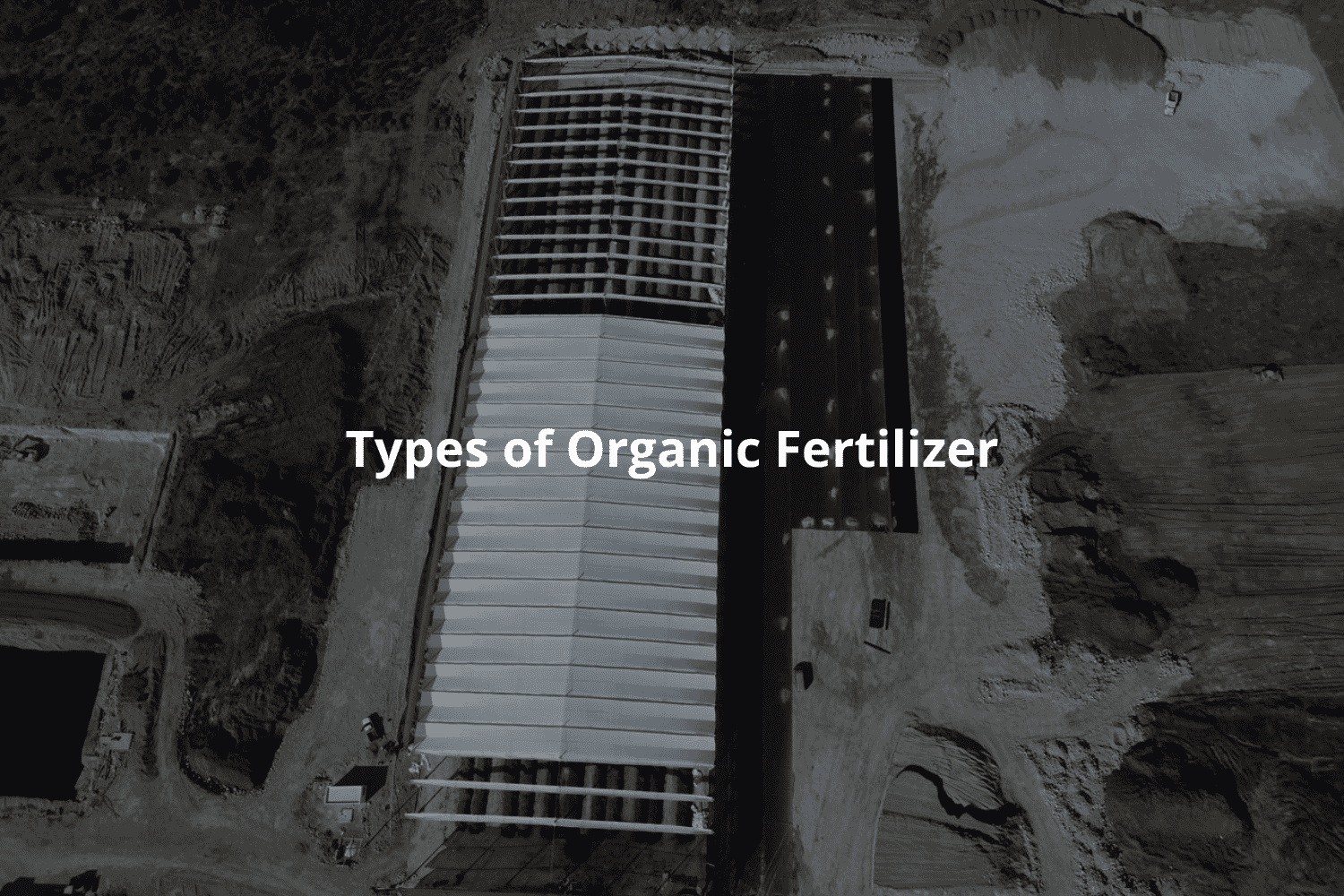
Types of Organic Fertilizer That Make a Difference
Not all organic fertilizers are the same. Their effectiveness depends on their origin and decomposition process.
Some of the most relevant include:
- Compost (decomposed organic waste)
- Treated manure
- Vermicompost
- Processed agricultural residues
- Composted agave bagasse
Each has specific characteristics, but all share the same goal: improving soil naturally.
Agave Bagasse: From Waste to Strategic Resource
One of the greatest assets in the agave industry is also one of its biggest challenges: bagasse.
This byproduct, generated during agave processing, can become an excellent organic fertilizer when managed properly.
Its transformation offers multiple benefits:
- Reduction of industrial waste
- Generation of natural fertilizer
- Improved sustainability of the production process
- Lower operational costs
This approach not only optimizes resources, but strengthens the entire value chain.
The Shift Toward Sustainable Practices
In a sector where efficiency and sustainability must go hand in hand, SUE Tequilana represents a vision aligned with the evolving needs of agriculture.
Its approach goes beyond agave production, considering the comprehensive use of available resources.
The use and development of organic fertilizer—especially from agave byproducts—becomes a key strategy to:
- Reduce environmental impact
- Improve productivity
- Generate value from waste
These practices position the company within a new generation of responsible agriculture.
Efficiency That Translates into Profitability
Beyond environmental benefits, organic fertilizer also represents an economic advantage.
Its use allows producers to:
- Reduce fertilization costs
- Decrease dependence on external inputs
- Improve crop yields
- Utilize internal resources
Although implementation may require time and planning, the medium- and long-term benefits are significant.
From Fertilization to Agricultural Strategy
The true value of organic fertilizer lies not in its isolated use, but in its integration within a broader agricultural system.
When combined with practices such as:
- Crop rotation
- Efficient water management
- Soil conservation
It becomes part of a strategy that not only improves production, but ensures its sustainability.
Agave: Productivity with Responsibility
The agave industry faces significant challenges: growing demand, environmental pressure, and the need for efficiency.
In this context, organic fertilizer emerges as a solution that balances productivity and sustainability.
It is not just about producing more, but about producing better—while protecting the resources that make cultivation possible.
Agave Organic Fertilizer as the Foundation of a New Agriculture
Organic fertilizer represents much more than an agricultural technique. It is a different way of understanding the relationship between production and nature.
In crops like agave—where time, soil, and resources play a crucial role—its use enables the development of more efficient, resilient, and sustainable systems.
For SUE Tequilana, adopting these practices not only improves operations, but also opens the door to new opportunities in an increasingly conscious market.
Because the future of agriculture depends not only on what is produced… but on how it is produced.
Continue exploring with other articles: