For many years, agave bagasse was considered merely a waste product generated by the tequila industry.
Today, however, this byproduct has become one of the most important raw materials for driving sustainable processes, regenerating agricultural soils, and strengthening the circular economy in Mexico.
The growing need to reduce agro-industrial waste and minimize the environmental impact of industries has increased the strategic value of agave bagasse across sectors such as agriculture, composting, biomaterials, and sustainable innovation.
In tequila-producing regions such as Jalisco, where large volumes of agave-derived waste are generated, the responsible use of bagasse represents an opportunity to transform an environmental challenge into high-value solutions for agriculture and the environment.
SUE Tequilana operates under a circular economy model focused on collecting, transforming, and utilizing organic agave waste to produce high-quality organic compost that contributes to soil regeneration and more sustainable agricultural practices.
What Is Agave Bagasse?
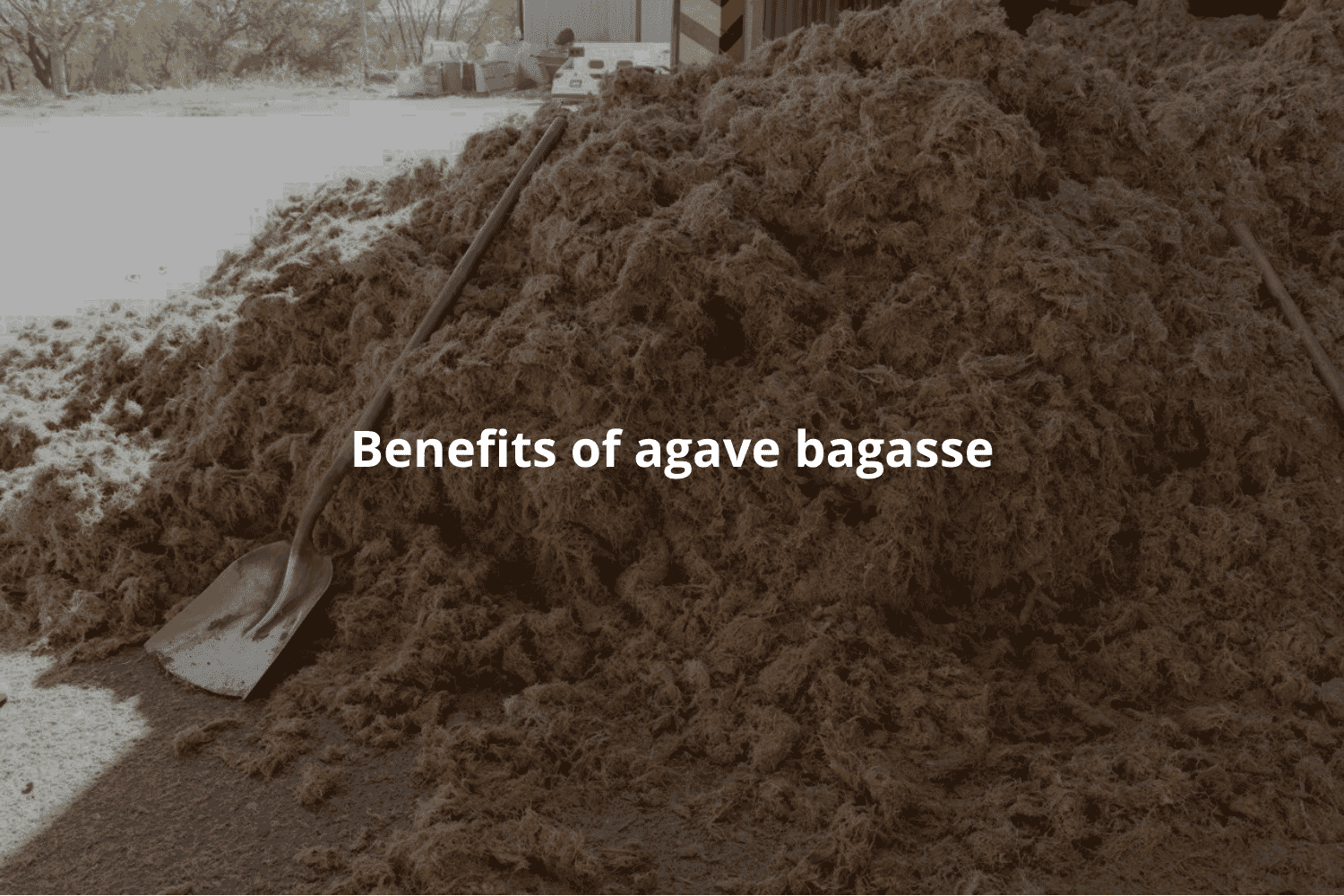
Agave bagasse is the fibrous residue left after the cooking, milling, and sugar extraction processes primarily used in the production of tequila and other agave-derived spirits.
This material consists mainly of plant fibers, cellulose, hemicellulose, and lignin, components that give it enormous potential for agricultural, industrial, and environmental applications.
Various studies have shown that bagasse can be reused to produce compost, biomaterials, biopolymers, and even biofuels.
The tequila industry generates millions of tons of bagasse every year. When this residue is not properly managed, it can cause environmental issues such as waste accumulation, greenhouse gas emissions, unpleasant odors, and contamination of soil and water bodies.
For this reason, the utilization of agave bagasse has become a key necessity in advancing toward more responsible and sustainable production models.
Agave Bagasse and the Circular Economy
One of today’s most important concepts is the circular economy, a model that seeks to reuse resources and minimize waste generation.
In the agave industry, this approach allows tequila byproducts to return to the fields as useful and sustainable agricultural solutions. Bagasse is no longer viewed as waste but as a valuable resource.
Industrial composting is one of the best examples of this transformation. Through controlled biological processes, bagasse can be converted into nutrient-rich organic compost that helps improve soil health while reducing dependence on chemical fertilizers.
At SUE Tequilana, this model is a central part of operations. The company collects bagasse and vinasse from the tequila industry and incorporates them into carefully controlled composting processes to create sustainable agricultural solutions.
Benefits of Agave Bagasse in Agriculture
The use of agave bagasse through organic composting offers multiple benefits for agricultural soils and crops.
Improves Soil Structure
Organic matter derived from bagasse helps improve soil porosity and aeration, promoting root development and reducing soil compaction.
Increases Moisture Retention
Soils enriched with compost made from bagasse can retain water more effectively, which is especially important in regions experiencing water stress or frequent droughts.
Promotes Microbial Activity
Agave-based compost encourages the growth of beneficial microorganisms involved in nutrient decomposition and natural soil regeneration.
Reduces Agro-Industrial Waste
Transforming bagasse into compost prevents large quantities of waste from accumulating or contaminating the environment.
Reduces the Use of Chemical Fertilizers
Although compost does not completely replace other nutrients in every agricultural system, it significantly contributes to reducing dependence on synthetic fertilizers and strengthening the soil’s natural fertility.
Agave Bagasse as a Solution for Sustainable Agriculture
One of the main challenges facing the tequila industry is the responsible management of organic waste generated during tequila production.
Among these residues, agave bagasse stands out for its enormous potential to be reused in sustainable processes that benefit both the environment and the agricultural sector.
Through industrial composting, bagasse can be transformed into organic compost rich in organic matter and nutrients, helping regenerate degraded soils, improve moisture retention, and enhance microbial activity.
This process not only reduces the accumulation of agro-industrial waste but also promotes circular economy models in which agave byproducts return to the fields as useful agricultural solutions.
At SUE Tequilana, the utilization of bagasse is part of a strategy focused on transforming organic waste from the tequila industry into high-quality compost for sustainable agricultural applications.
Through specialized waste management and processing methods, the company helps reduce the environmental impact of the agave industry while promoting more responsible practices for soil care and the sustainable use of natural resources.
In addition, these solutions help reduce dependence on chemical fertilizers and encourage a more balanced, regenerative form of agriculture aligned with current environmental needs.
SUE Tequilana’s Role in the Sustainable Use of Agave Bagasse
The responsible transformation of organic waste requires infrastructure, technical expertise, and specialized processes.
At SUE Tequilana, agave bagasse is integrated into a sustainable utilization model focused on producing high-quality organic compost for agriculture.
Its infrastructure includes bagasse reception platforms, vinasse collection lagoons, and technological systems designed to optimize the composting process and ensure a stable and safe product for agricultural soils.
In addition to reducing the environmental impact of the tequila industry, this approach helps return nutrients to the land, strengthen soil health, and promote more responsible agricultural practices.
SUE Tequilana also promotes a triple-impact vision:
- Environmental
- Social
- Economic
Through this approach, the company demonstrates that sustainability and innovation can be successfully integrated into Mexico’s agro-industrial sector.
The Future of Agave Bagasse in Mexico
Mexico is one of the world’s leading producers of agave and tequila, meaning that the utilization of its waste streams will become increasingly important for the country’s sustainable development.
The valorization of agave bagasse represents an opportunity to:
- Reduce industrial waste
- Decrease pollutant emissions
- Regenerate agricultural soils
- Create new biomaterials
- Promote the circular economy
- Strengthen sustainable agriculture
More companies, researchers, and producers are recognizing that the future of the industry depends not only on producing more but also on making better use of existing resources.
Agave bagasse should no longer be viewed as a simple byproduct of the tequila industry. Today, it represents a raw material with enormous potential to transform agriculture, drive sustainable solutions, and foster circular economy models.
Through responsible composting and waste valorization processes, it is possible to convert tons of bagasse into organic compost capable of regenerating soils, improving crop performance, and reducing the environmental impact of industry.
At SUE Tequilana, this commitment is reflected in concrete actions focused on transforming agave waste into sustainable agricultural solutions that benefit farmers, the environment, and future generations.
More content on our blog: